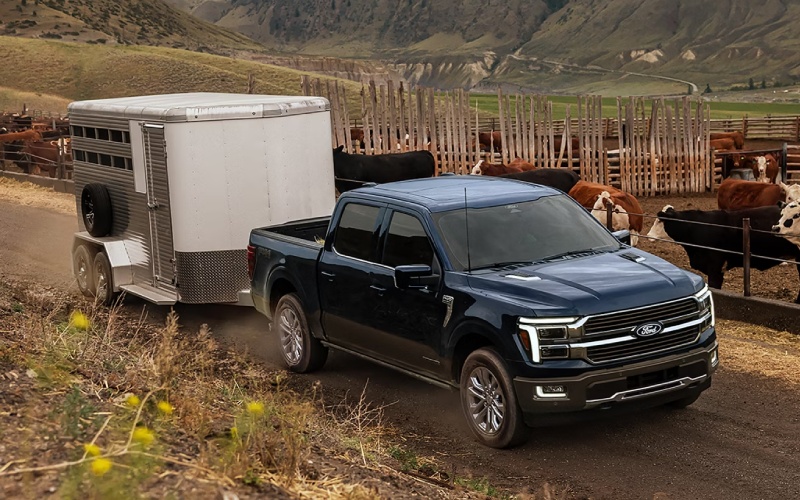
Morrie's Auto Group - Can a 2026 Ford F-150 Tow a Wake Boat to Lake Minnetonka from Minneapolis, MN?
If your weekend plans involve an early launch on Lake Minnetonka, the 2026 Ford F-150® has the muscle and tech to pull a modern wake boat with confidence—when you choose the right configuration. At Morrie’s Auto Group, we help Twin Cities shoppers zero in on the exact engine, axle, cab, and towing features that match the real weight of your boat, trailer, and gear so you can tow smoothly from Minneapolis, MN to your favorite launch without second-guessing.
Why this question matters for Minneapolis boaters
Wake boats vary widely in weight once you account for the trailer, fuel, ballast, batteries, coolers, boards, and crew. Add in the rolling hills on Highway 12 and the short, sometimes crowded approaches to ramps around Wayzata Bay, Grays Bay, or Spring Park, and it becomes clear you want an F-150® that is not only rated to tow the load but also set up to control it at low speeds on steep, wet ramps.
Ford gives you a clear performance foundation: max available towing of up to 13,500 lbs and max available payload up to 2,440 lbs (when properly configured). The key is matching those capabilities to your specific boat-and-trailer package and picking features that make launch and retrieval easier in real-world Twin Cities conditions.
Start with the real numbers behind your boat and trailer
Before you choose an F-150®, get a handle on the actual loaded weight you plan to tow. That number is rarely the dry weight listed in the brochure. Here’s a simple checklist we use with customers to keep the decision grounded in facts, not guesses:
- Boat + trailer weight: Confirm the trailer’s GVWR tag and your boat’s capacity plate, or have the rig weighed fully loaded.
- Tongue weight: Plan for roughly 10-15% of total trailer weight on the hitch and make sure this fits within the F-150®’s available payload.
- Gear and people: Count coolers, boards, ballast water, batteries, and passengers in the cab—these all affect payload and GCWR considerations.
- Route and ramps: Consider your usual path from Minneapolis to the launch, typical traffic, ramp slope, and how often you’ll be maneuvering in tight lots.
Bring these details to our team and we’ll translate them into the right F-150® configuration, including engine choice, axle, Tow/Haul Package, and helpful towing tech.
Which 2026 F-150® engines map best to wake boats?
Ford offers several engines for the 2026 F-150®, each with a clear towing lane. Use the ratings below to match common wake-boat scenarios near Minneapolis—then we’ll fine-tune for your exact setup.
- 2.7L EcoBoost® V6: Up to 8,400 lbs max available tow rating—great for smaller wake boats and lighter single-axle trailers.
- 3.5L PowerBoost® Full Hybrid V6: Up to 11,600 lbs max available tow rating—smooth torque for mid-size wake boats, plus available Pro Power Onboard™ for small accessories at the ramp.
- 5.0L Ti-VCT V8: Up to 12,900 lbs max available tow rating—strong, linear pull for larger wake boats with gear and full tanks.
- 3.5L EcoBoost® V6: Up to a best-in-class 13,500 lbs max available tow rating—confident headroom for heavier rigs and longer hauls.
Remember: tow ratings vary by cab, bed, drivetrain, axle, and equipment. We’ll confirm the exact rating for the truck you’re considering and balance it against payload so your tongue weight stays safely within limits.
One more practical note for lake life: payload matters almost as much as tow rating. That 10-15% tongue weight plus passengers and gear in the cab and bed all count toward payload. We’ll show you how to read the door-jamb labels and choose an F-150® that keeps you comfortably in the green.
Features that make towing and launching easier in the Twin Cities
Beyond raw numbers, a few 2026 F-150® features can make every trip to Lake Minnetonka feel more controlled and less stressful:
- Tow/Haul Package: Includes an integrated trailer brake controller and a max tow axle upgrade (3.55 or 3.73 e-locking rear axle depending on powertrain). This setup helps with smoother stops and better low-speed traction on slick ramps.
- Available 4x4 with two-speed automatic 4WD: Selectable low-range gearing can aid controlled launches and retrieval on steeper or algae-slick surfaces.
- Available 360-Degree Camera: Extra visibility around the truck and trailer helps with backing down narrow ramps or positioning at busy lots.
- Zone Lighting and LED Lighting: Illuminate the area around your truck during early morning prep or post-sunset retrievals.
- Pro Access Tailgate: The swing-out opening lets you step closer to the bed—useful for grabbing straps or fenders when a trailer is still hitched.
- Pro Power Onboard™ (available): Useful for small accessories like chargers or inflators at the marina. Check output needs—we’ll help you match the outlet to the task.
- Ford Co-Pilot360® Technology: Driver-assist features can help with awareness around town; on highway stretches, the F-150® also offers BlueCruise hands-free highway driving on select divided roads when conditions allow—many boaters still prefer full manual control while towing, and we’ll help you decide what fits your comfort level.
Inside the cab, practical storage helps keep the crew organized. Available lockable under-seat storage secures tools or tow straps, and the available Interior Work Surface makes it easy to sign a marina permit or review a pre-launch checklist on a tablet.
Cab and bed choices for lake-life logistics
If you’re hauling boards, vests, and coolers across town, the SuperCrew® is a popular pick for its spacious rear seating and easy-access doors. Pair it with a 5.5-foot bed for maximum maneuverability at crowded ramps, or the 6.5-foot bed if you routinely carry larger coolers or a portable dock box in the bed with the tonneau closed. Regular Cab models offer the longest bed options for gear but trade away rear-seat space—fine if your crew rides in the boat, less ideal if everyone piles into the truck after a day on the water.
No matter the cab and bed, we’ll help you verify the exact towing numbers for that configuration and confirm receiver, ball mount height, and wiring for your trailer brakes and lights.
How we help Minneapolis shoppers dial in the right F-150®
Our approach is hands-on and local. We’ll look at your specific wake-boat model, trailer type, and typical routes from Minneapolis to your go-to launch. Then we’ll recommend an engine, axle ratio, and Tow/Haul Package combination that gives you margin, not just a match on paper. We’ll also walk through payload versus tongue weight, demonstrate the integrated trailer brake controller, and help you practice maneuvering with the available 360-Degree Camera. If you want to compare SuperCrew® bed lengths for gear management, we can stage that on site.
When you’re ready, we’ll set up a route that mimics your real drive—merging, stop-and-go near the lake, and a few tight turns—so you can feel the difference between engines and wheelbases before you commit. Our goal is simple: make that first Saturday morning tow to Lake Minnetonka feel easy, predictable, and enjoyable.
Frequently Asked Questions:
Do I need the Tow/Haul Package to tow a wake boat with the 2026 F-150®?
We strongly recommend it if you plan to tow regularly. The Tow/Haul Package includes an integrated trailer brake controller and a max tow axle upgrade—either a 3.55 or 3.73 e-locking rear axle depending on the powertrain—which improves control during braking and traction on slick ramps.
Which cab and bed combo works best if I launch at Lake Minnetonka most weekends?
Many boaters choose a SuperCrew® for people space and everyday usability, paired with a 5.5- or 6.5-foot bed depending on how much covered bed storage you want for vests, ropes, and coolers. Regular Cab models maximize bed length for cargo but sacrifice rear seating. We’ll help you compare turning ease, gear capacity, and the exact tow ratings of each combination.
How do I confirm my wake boat is within the F-150® limits before I buy?
Use a step-by-step approach and verify everything against a specific truck’s door-jamb labels and Ford specs:
- Identify your boat’s real-world weight with full fuel, common gear, and the trailer.
- Estimate tongue weight at 10-15% of total trailer weight.
- Choose an engine and axle that provide headroom over your total trailer weight.
- Confirm payload can comfortably accommodate tongue weight plus passengers and in-cab gear.
- Verify the truck’s hitch class, wiring, and brake controller match your trailer’s requirements.
If you’d like help with any of this, bring your boat details to our showroom and we’ll run the numbers with you.
Ready to see how a properly configured 2026 Ford F-150® tows your wake boat from Minneapolis to Lake Minnetonka? Visit us at Morrie’s Auto Group and we’ll tailor an F-150® to your exact rig, walk you through the tow and payload math, and set up a test route that mirrors your weekend routine. When it’s time to launch, you’ll know your truck is up for the job—no surprises, just smooth towing and a great day on the water.